
80/20 Rule in
Survivalism
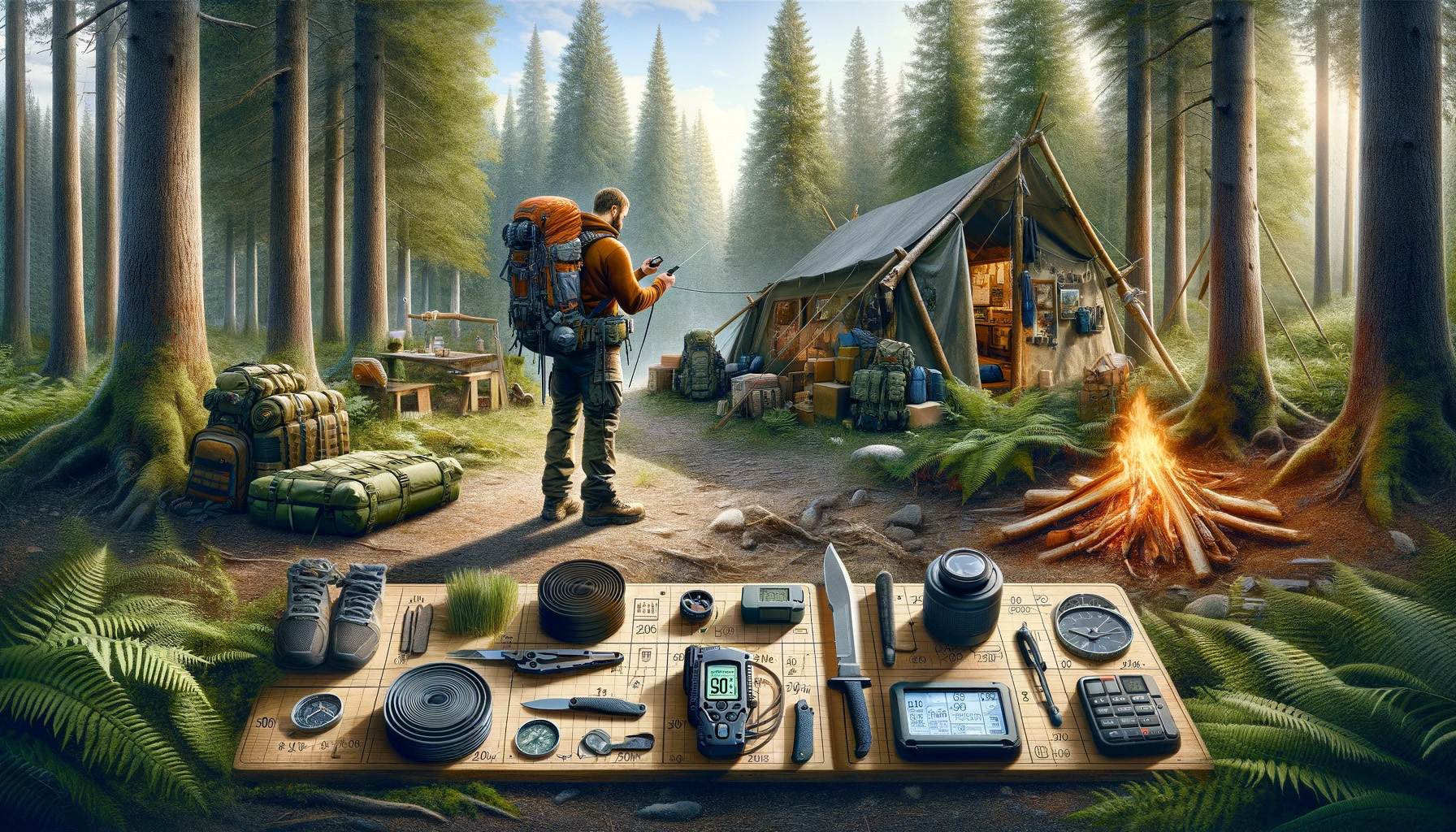
The pack has three ways to make fire, and nobody knows the route. You can tie a knot. You cannot say when you will be home.
About 20% of the pack covers 80% of a bad night. The rest is often a pile of gear or complex techniques people expect to save them - not the few simple checks that actually reduce most calls. That split is a rule of thumb. Rescues have a messier shape.
Put the attention on the way down, being found, and staying dry. The catalog can wait until those are dull. Leave treatment steps on the park page.
The way down is where the calls cluster
Baxter State Park in Maine kept search-and-rescue reports from July 1992 through June 2014. Chris Welter, Matthew Sholl, Tania Strout, and Ben Woodard read 754 incidents (Wilderness & Environmental Medicine, 2015). Trauma started 51% of them. Another 30% were late or lost parties. Slips or falls while hiking were 67% of the injuries. The lower leg or foot was the most common injury site, 31%. Nineteen people died in those twenty-two years. Death was rare next to fatigue and a fall. The calls were not rare.
When the report noted whether the person was going up or down, 84.4% of the acute need was on the way down. "When applicable" is the paper's phrase. Direction was not on every form, so do not read 84.4% as a share of every incident in the file. Fatigue was the most common medical emergency, causative in 66% of the medical search-and-rescue events. The average age in the file was 38.9 years. When fatigue was the main complaint, the average age was 48.7. Men were 60.5% of the people helped.
The park's own plain-language summary of that work uses a second denominator. About 20% of all search-and-rescue responses were fatigue, and 66% of the medical ones (Baxter State Park summary). Both lines can be true. Medical events are a slice of all responses. Quote the denominator you mean.
20/80 pattern: the tired legs on the way down decide the afternoon. The summit photo does not.
What the hobby adds: a faster ascent, a new blade, a plan that only describes the way up.
Warning sign: you can name the summit time, and you have no turn-around time.
Do this: pick the turn-around while walking still feels easy. Write it down before you leave the car. The way down is the part Baxter's noted cases kept showing.
Being found beats another skill
Across National Park Service units from 2003 to 2006, Travis Heggie and Tracey Heggie counted 12,337 search-and-rescue operations and 15,537 visitors. Those operations ended with 522 deaths, 4,860 people ill or injured, and 2,855 saves. Forty percent of the operations fell on Saturday and Sunday. People ages 20 to 29 were in 23% of the incidents. Men were 66.3% of the visitors who needed help (Journal of Travel Medicine, 2009).
The activities with the most operations were day hiking, motorized boating, swimming, overnight hiking, and nonmotorized boating. The vast majority of people were located within 24 hours. The most common contributing factors, in the paper's words, were an error in judgment, fatigue and physical condition, and insufficient equipment, clothing, and experience. The abstract does not print a percent for each factor.
The National Park Service ten essentials start with a plain order. Tell someone where you are going and when to expect you back. Pack a layer you can see. Bright clothing makes a person easier to find. Bring a paper map, not only a phone (NPS ten essentials). The list comes from The Mountaineers' Freedom of the Hills. It is a packing system, not a proof that ten items share the risk evenly.
The ten items are a floor, not a menu to cut down to three. A first-aid kit, sun cover, and a way to repair a strap still belong in the pack. Heggie's file lists insufficient equipment as one of the common contributing factors, with no percent attached. Missing water is that factor. A fourth fire steel is not. This page ranks the failures that dominate the reports. It does not license an empty pack.
20/80 pattern: the person at home, with the trail name and the time, starts the search. A navigation certificate does not, if nobody knows you are late.
What the hobby adds: a month-in-the-woods course, while the file is full of day hikes, boats, and swims that were supposed to end by dinner.
Warning sign: the only plan is in your head, and the phone stays in the car.
Do this: one text before you lose service. Trail name. Who is with you. The time you will call. If that time passes, they should call for help. You do not need a new knot for that text.
Dry clothes before another fire tool
Sequoia and Kings Canyon's trail page is blunt about cold. Hypothermia can show up in any season, in cool air as warm as 60°F (16°C), or in water, if the exposure goes on. The signs they list are shivering, memory loss, stumbling, confusion, and sleepiness. People in it often do not see the danger. The page's prevention line is short. Stay dry. Wet clothes can lose up to 90% of their insulating value (Sequoia trail safety). That 90% is the park's safety wording, not a lab paper with a methods section. It is still the number that should change what you wear.
On the ten-essentials page, emergency shelter is called one of the most important elements when the weather turns. A tent, a tarp, a bivy, or a space blanket are the examples. Extra clothing is its own line: a layer for the worst condition you might meet, not the condition in the parking lot. Fire is on the list too, as a signal and a heat source, and only inside the park's fire rules. Fire is not the first purchase if you are still in cotton with no shell.
If someone is already stumbling and confused, the park page says get them into dry clothes or a shelter and get help if it does not ease. This article will not add a treatment. First aid is a different page, and a park ranger is a different person. The move here is earlier. Do not be wet and cotton when the wind comes up.
20/80 pattern: the layer that still works when it is wet, and a shelter you have taken out of the package, cover the night. The third fire starter does not.
What the hobby adds: ferro rods, fatwood in three bags, a knife you have not used, and a hoodie that fails when it rains.
Warning sign: you can start a flame in the yard, and you have no dry layer in the pack.
Do this: one shell or one insulation layer that you have worn in the wet, plus a shelter you have opened once at home. Leave the extra fire tool on the shelf until that layer is boring.
The water in the pack, and the trips that call
The same park system tells you to drink before you feel thirsty, and to carry water plus a way to treat more if the day runs long. Sequoia's page adds a local rule. If you cannot carry all the water, you must treat what you take from the lakes and rivers. The method lives on that page. Practice it on a calm day, at home or at a tap, before you are thirsty. This article will not teach a recipe. A half-remembered boil time in the dark is how a tool becomes a guess.
Heggie's activity list is the other correction. The operations piled up on day hikes, boats, and swims, plus overnight hikes. They did not pile up on a year in the backcountry. Hiking and camping are the ordinary trips inside that file. A survival hobby that only rehearses collapse misses the Saturday that actually generates the call.
Gallons in a closet are a household problem. They belong on the prepping page, with medicines and a radio. Once you have left the house, the water that matters is the bottle already in the pack. A filter still sealed in plastic does not count.
What the hobby adds: a second filter, a still, a course in living off the land, while today's bottle is half empty.
Warning sign: you can name three treatment gadgets, and you cannot say how much water is in the pack right now.
Do this: fill tomorrow's water tonight. Put it in the pack by the door. If the day has no treated backup and no carried water, that is the only shopping. Not a new blade.
Four lines, then no new gadget
Illustrative: the pack had a new ferro rod and a cotton hoodie. No one at home had the trail name. The turn-around was "when we get to the top." The bottle was half full at the car. If that day had become a file, it would have looked like the national-park pattern. A day hike. A judgment call. A night that was not in the plan. The rod was not the missing piece.
- Who knows the route, and the time you will call.
- The layer or shelter that still works if you get wet. You have opened it once.
- Water for the day, already in the pack.
- The turn-around time, set for the way down, while you can still walk.
The ignored majority is the catalog. Another blade. Another starter. A plan for a month outside, while the recorded trouble is a Saturday, a wet layer, and a person nobody is waiting on. Keep the long practice if you love it. It does not get a dollar, or an evening, until the four lines are true.
8020 move: if nobody knows the route, no new tool this month. Send the text. Then look at the pack.
Misreads that grow the pack
"Fatigue is only about 20%, so it is a side issue." The park summary says about 20% of all Baxter responses. The paper says 66% of the medical ones. Use the denominator. Tired legs are not a footnote inside the medical slice.
"The dangerous part is the climb." When Baxter's reports noted direction, 84.4% of the acute need was on the way down. Plan the descent, and the time you will still be able to walk it.
"A survival course replaces telling someone." In the national-park years Heggie studied, most people were found within a day. The search starts when a person at home notices you are late. A skill you have not told anyone about does not start that clock.